
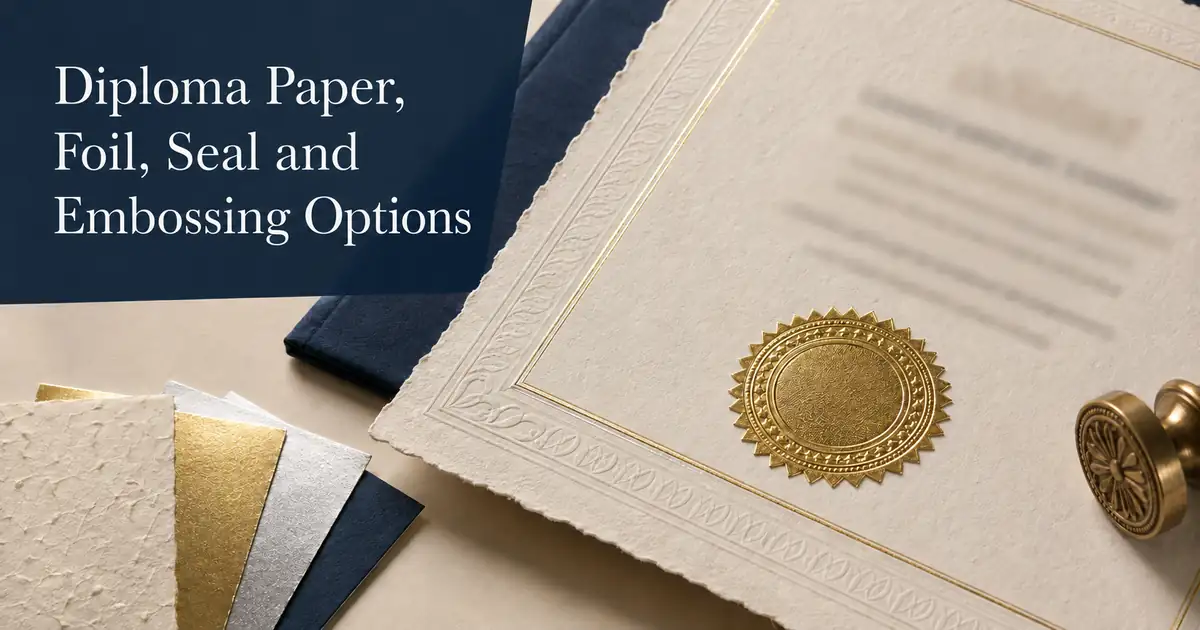
Choosing the right diploma paper matters just as much as choosing the wording or layout. Paper controls the feel, foil catches the light, a seal creates a focal point, and embossing adds physical depth. The best combination is the one that suits the design, occasion, and display—not simply the most expensive one.
Quick answer: For a traditional keepsake, choose ivory or parchment-style paper with restrained gold foil and a lightly embossed decorative seal. For a contemporary design, smooth white or cotton paper with silver foil or blind embossing works well. Transcript-style layouts need a smoother, quieter finish so detailed text remains readable.
Table of Contents
ToggleWhy Materials Change the Entire Look of a Diploma Keepsake
A diploma-style design relies on typography, spacing, borders, signatures, and a seal. With relatively few visual elements, paper texture and finishing become unusually noticeable.
The four main decisions affect different parts of the finished piece:
- Paper controls color, texture, stiffness, print sharpness, and how the piece sits in a cover or frame.
- Foil adds a reflective metallic finish, usually in gold or silver, to selected text, borders, or seals.
- The seal creates a formal visual anchor and can be printed, applied, foiled, or embossed.
- Embossing physically raises part of the paper, giving the design texture and dimension.
These choices should be made together. A detailed seal can lose clarity when deeply embossed, textured paper can soften very small text, and an overly rigid stock may feel awkward inside a document cover. Good material selection is about balance.
Diploma Paper Options Explained
People often ask for “the thickest paper,” assuming thickness means quality. It does not. Weight, texture, color, fiber content, stiffness, and compatibility with printing and finishing all matter. A balanced document stock can look more appropriate than card that feels like packaging.
Smooth Ivory or Cream Paper
Smooth ivory and cream stocks are the most versatile choices for a traditional diploma-inspired layout. The warm color softens the contrast of dark navy or black typography, while the relatively smooth surface keeps names, dates, borders, and small lettering crisp.
Best for: classic diploma layouts, graduation keepsakes, memorial pieces, formal gifts, and matched diploma-and-cover presentations.
Parchment-Style Paper
Parchment-style paper is modern paper made with a mottled, clouded, or lightly fibrous appearance that recalls traditional parchment. It is not animal skin. Its main advantage is atmosphere: even before foil or a seal is added, the sheet already has a ceremonial, established look.
The tradeoff is that texture competes with fine detail. A highly mottled sheet can reduce contrast in a transcript-style design or make a delicate border look uneven, so stronger paper patterns call for restrained finishing.
Best for: traditional keepsakes, vintage-inspired designs, family-history displays, and pieces intended to feel older or more ceremonial.
100% Cotton Paper
Cotton paper has a softer, more tactile surface than many wood-pulp stocks. It feels substantial without needing to be excessively rigid, and its natural texture gives a personalized keepsake a quiet premium quality. Cotton stock also suits designs where the paper itself should feel special rather than simply acting as a background.
Cotton papers vary in softness, so fine borders and dense text should be proofed carefully. A large, simple embossed seal generally performs better than an extremely intricate raised design.
Best for: premium gifts, commemorative pieces, minimalist layouts, and keepsakes intended to be handled as well as displayed.
Smooth White Paper
Bright or natural white paper produces a cleaner and more contemporary result. It gives black, charcoal, blue, and colored printing strong contrast and works particularly well with silver foil. White paper also helps a structured certificate or transcript-style layout feel organized and easy to read.
Best for: modern certificates, professional recognition pieces, transcript-style keepsakes, contemporary offices, and silver-foil designs.
What Does GSM Mean?
GSM means grams per square meter. It measures paper mass, not exact thickness. Two papers with the same GSM can feel different because of density, surface, and compression.
For a diploma-style keepsake, the goal is a stock that feels more substantial than office paper while still lying flat and fitting comfortably inside a document cover. Extra weight helps only when it improves the presentation.
If paper feel is important to your decision, the most reliable approach is to request a free sample. Photographs can show color and shine, but they cannot show stiffness, texture, or how foil changes as you tilt the page.
Gold Foil, Silver Foil and Printed Metallic Effects
Foil reflects light instead of merely reproducing a metallic color. It changes with the viewing angle; metallic ink may imitate the hue but usually lacks the same reflective highlight.
Gold Foil
Gold foil is the traditional choice because it pairs naturally with cream, ivory, parchment, navy, black, burgundy, and dark green. It gives a seal or border warmth and ceremonial character.
Gold works best when it is selective. A foil seal, thin border, or short heading can look refined; using it on too many elements can make the page feel decorative rather than formal.
Silver Foil
Silver foil feels cooler and more contemporary. It pairs with white paper, charcoal text, dark blue borders, cool gray, and minimalist layouts, especially when gold would compete with the palette.
Silver may appear bright white in one photograph and gray in another because it reflects nearby colors. That changing reflection distinguishes foil from flat printing.
Flat Foil Versus Raised Foil
Flat foil adds metallic color and reflection while leaving the paper surface mostly level. It is the better choice for fine borders, smaller lettering, or detailed line work.
Raised foil combines a metallic finish with an embossed impression, so the selected area both shines and stands above the surrounding paper. It produces a stronger tactile effect and works best on a seal, crest-style decorative element, monogram, or short title.
Raised foil is not better for every element. Fine text is easier to read when flat, so the strongest results often combine printed typography with one raised foil focal point.
Diploma Seal Options
A seal gives the eye a place to land. It can sit at the bottom center, beside the signature area, or within the main body of the design. The right seal should support the composition without overpowering the graduate’s name or achievement.
Printed Decorative Seal
A printed seal is part of the main artwork. It can include color, fine lines, initials, a date, a motto, or a custom decorative motif. Because it is printed, it handles small details well and does not add physical thickness.
This is the most flexible choice for colorful or intricate artwork and for transcript-style designs where a raised seal could interfere with dense information.
Applied Foil Seal
An applied foil seal is a separate decorative element attached to the page. It creates a clear metallic focal point and may have a textured or embossed surface. Applied seals can feel more dimensional than a printed emblem, although their edge and placement become part of the visual design.
Embossed or Raised Foil Seal
An embossed seal is formed by pressing the paper between dies so that the selected design rises above the page. When metallic foil is added in registration with that raised shape, the result is a raised foil seal.
This tactile finish needs breathing room. The seal should be large enough to remain clear and should not sit too close to an edge, signature line, or dense text.
For a commemorative keepsake, a seal should be treated as a decorative design element. It should not be presented as proof of accreditation, institutional verification, or official issuance. THEGRADORA’s custom diploma designs are created for display, gifting, graduation memories, and personal commemoration only.
Embossing Options: Raised, Blind and Debossed
Embossing is often used as a general word for any pressed texture, but there are several distinct effects.
Blind Embossing
Blind embossing raises the paper without adding ink or foil. The design is visible through light and shadow rather than color. It is subtle, elegant, and especially effective on cotton or smooth heavyweight paper.
Blind embossing works best for simple shapes, monograms, borders, and seals with enough open space to remain legible. Very fine lettering can disappear because the effect depends on relief rather than color contrast.
Foil Embossing
Foil embossing aligns metallic foil with a raised impression. It is more noticeable than blind embossing and creates both reflection and depth. Gold foil embossing gives a traditional effect; silver foil embossing produces a cleaner, more modern one.
The foil and raised impression need to align cleanly. A digital proof confirms size and placement even though a screen cannot reproduce the final texture.
Debossing
Debossing presses the design down into the paper instead of raising it. The recessed effect can be used with or without foil. It feels understated and works well on covers, holders, minimalist certificate designs, and large initials.
Embossing is the more familiar diploma-style choice. Debossing works when you want texture without a raised area that catches strongly under glass.
How to Choose the Right Combination
Start with the intended mood, then choose the paper, and only after that decide how much foil and embossing the design needs. This order prevents the finishes from competing with each other.
| Design Goal | Recommended Paper | Foil | Seal / Embossing | Why It Works |
|---|---|---|---|---|
| Traditional diploma keepsake | Ivory or subtle parchment-style paper | Gold | Raised foil or lightly embossed seal | Warm, formal, and familiar without becoming overly ornate |
| Modern professional display | Smooth white or natural white paper | Silver | Blind emboss or simple silver seal | Clean contrast and a contemporary finish |
| Premium commemorative gift | Cotton or premium ivory paper | Gold or silver, used sparingly | One raised focal element | The paper feels special while the finish adds controlled detail |
| Memorial or family-history piece | Warm ivory, cotton, or restrained parchment | Antique-style gold | Decorative custom seal with gentle relief | Warm and respectful, with emphasis on memory rather than shine |
| Transcript-style keepsake | Smooth white or ivory paper | Minimal or none | Small printed seal or flat foil detail | Preserves readability across rows, columns, and small text |
| Certificate or recognition piece | Smooth white, ivory, or cotton paper | Gold or silver based on the color palette | Printed, embossed, or raised foil seal | Flexible enough for formal, creative, or workplace recognition themes |
If you are still choosing the wording, typography, border, and layout, read our guide to personalizing a custom diploma or transcript-style design. Material choices are easier once the visual hierarchy is settled.
Common Material and Finishing Mistakes
- Choosing every premium option: Textured paper, a large foil border, metallic headings, and an embossed seal can compete. Pick one primary finish and let the others support it.
- Using heavy texture behind small text: Dense transcript entries, signatures, and fine borders remain clearer on a smoother stock.
- Making the seal too large: The name and achievement—not the seal—should be noticed first.
- Expecting a screen proof to show texture: Use the proof for wording and layout accuracy; use a physical sample to judge paper feel, reflection, and raised depth.
- Ignoring the display environment: Consider the cover, wall color, surrounding frames, and lighting. Our diploma keepsakes and display guide explains placement, glazing, light, and humidity.
Proofing Paper, Foil and Embossing Choices
Before production, confirm the material specification separately from the text proof. A useful review checklist includes:
- Paper color: white, natural white, ivory, cream, or parchment-style
- Paper surface: smooth, lightly textured, or cotton
- Final size and orientation
- Foil color and exact elements receiving foil
- Whether foil remains flat or is combined with embossing
- Seal type, size, and placement
- Whether the selected texture could affect small text or line work
At THEGRADORA, the design and production process includes a digital proof before printing, followed by checks for text accuracy, alignment, print clarity, seal placement, finish, trim, edges, and corners. You can review the complete custom design process before placing an order.
How to Protect the Finished Piece
Premium paper and foil still need sensible care. Avoid direct sunlight, uncontrolled humidity, adhesive tape, lamination, and poor backing materials. Store the piece flat in a protective cover or use acid-free matting in your own frame.
The U.S. National Archives recommends stable conditions, protection from light, and suitable acid-free materials for family papers. Its guide to preserving family archives also applies to valued commemorative paper pieces.
Do not press the raised seal tightly against hard surfaces during storage. If the design includes embossing, a document cover or mat can help prevent repeated rubbing and flattening.
Frequently Asked Questions
What is the best paper for a diploma keepsake?
There is no single best paper for every design. Smooth ivory is the safest traditional choice, parchment-style paper creates a vintage ceremonial look, cotton paper feels especially premium, and smooth white paper suits modern or text-heavy layouts.
Is parchment paper better than cotton paper?
They serve different visual goals. Parchment-style paper emphasizes traditional appearance, while cotton paper emphasizes texture and tactile quality. Choose parchment for a vintage look and cotton for a refined, understated feel.
What is the difference between metallic printing and foil?
Metallic printing reproduces a gold or silver color with ink or toner. Foil is a separate reflective layer that changes with the light and generally creates a stronger metallic effect.
Should I choose gold or silver foil?
Gold works naturally with ivory, cream, parchment, navy, burgundy, and traditional layouts. Silver pairs well with white paper, cool gray, dark blue, and contemporary designs. The surrounding color palette should make the decision.
What is an embossed diploma seal?
An embossed diploma seal is a raised decorative design formed by pressing the paper between dies. It may remain uncolored as a blind emboss or be combined with gold or silver foil for a raised metallic finish.
Can the paper show embossing on the reverse side?
Yes. Because embossing physically reshapes the paper, some impression may be visible or detectable on the reverse. The amount depends on the paper, the depth of the emboss, and the size of the design.
Can I customize the seal, foil color and paper?
Available options depend on the selected layout and production requirements. Share your preferred paper, foil color, seal style, and embossing effect through the custom order form so the combination can be reviewed before production.
Are THEGRADORA diploma designs official documents?
No. THEGRADORA creates personalized commemorative keepsakes for display, gifting, graduation memories, props, and personal use. They are not school-issued diplomas, academic records, or credentials and cannot be used for employment, admissions, licensing, immigration, identification, or verification.
Choose Materials That Support the Story
The best diploma keepsake does not call attention to paper, foil, or embossing as separate upgrades. The materials work together so that the name, achievement, and memory remain central. Start with the mood you want, choose a paper that supports it, and then add one or two finishing details with purpose.
To compare the materials in person, request a free sample. When you are ready to specify the paper, seal, foil, and personalized details, start a custom order or browse THEGRADORA’s diploma keepsake designs.
Important Notice: THEGRADORA products are custom commemorative keepsakes created for novelty, display, gifting, remembrance, props, and personal use only. They are not issued by schools, universities, registrars, accrediting bodies, or credential-verification services. They must not be used for employment, admissions, licensing, immigration, identification, background checks, credential verification, or any misleading or official purpose. If you need an official diploma, transcript, or certificate, contact the original issuing institution.