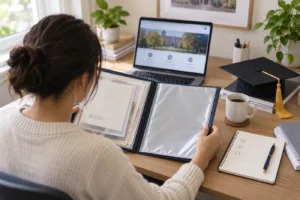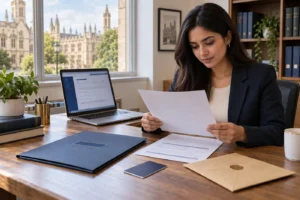
Most people's important documents live in one of three places: a random drawer, a shoebox in a closet, or a folder that used to be organized in 2019. It works fine until it doesn't — until a pipe bursts, a move goes badly, or you need your birth certificate on two days' notice and discover it's in a box in your parents' garage.
The good news is that decent document storage isn't complicated or expensive. It's mostly about deciding what deserves protection, putting it somewhere that won't destroy it, and making digital copies so a single bad day can't erase everything. Here's how to actually set it up.
Table of Contents
ToggleStart by sorting into three tiers
Not everything needs the same protection. Sorting first makes the rest obvious.
Tier 1: irreplaceable or very hard to replace. Birth certificates, Social Security cards, passports, marriage and divorce records, naturalization papers, wills and trusts, property deeds, vehicle titles, original diplomas, military discharge papers. These get the strongest protection you have.
Tier 2: replaceable but a hassle. Insurance policies, tax returns, medical records, warranties, loan documents, transcripts. Losing these is annoying and time-consuming, not catastrophic.
Tier 3: keep but don't fuss. Receipts, manuals, old statements, expired documents you're keeping for reference. Organized storage is enough.
Most households have far less Tier 1 than they expect — usually a stack you could hold in one hand. That's the stack that deserves real protection.
What actually destroys documents at home
Worth knowing what you're protecting against, because the threats aren't evenly distributed.
Water, by a wide margin. Burst pipes, roof leaks, appliance failures, flooding, and the water damage that follows a fire. Water is the most common way home documents get destroyed, and it doesn't require a disaster — a slow leak under a closet shelf will do it.
Humidity. Slower and sneakier. Paper absorbs and releases moisture with the ambient air, and repeated cycling causes warping, foxing (those brown spots on old paper), and eventually mildew. Basements, attics, garages, and exterior-wall closets are the usual culprits.
Light. UV breaks down paper fibers and fades inks. This is mostly a problem for displayed documents rather than stored ones, but a document sitting in a sunny room in a clear sleeve will degrade.
Heat and temperature swings. Attics, garages, and anywhere near heating equipment. Heat accelerates the chemical breakdown of paper, and swings compound it.
Acid. The slow killer. Most cardboard, standard folders, and non-archival plastic sleeves are acidic, and that acid migrates into the paper touching it over years. It's why old documents in cheap folders develop brown edges.
Pests and mechanical damage. Silverfish and rodents genuinely eat paper. And the mundane version: documents get bent, torn, coffee-stained, and thrown out by someone who didn't know what they were.
The physical setup
A fireproof, waterproof safe for Tier 1
This is the single highest-value purchase for document storage. A few things to look for:
Get one rated for both fire and water. Plenty of safes are fireproof but not waterproof, which is a problem given that firefighting involves a great deal of water. Fire ratings are typically expressed as a time and temperature (one hour at a given internal temperature), and paper needs a lower internal temperature than the ratings designed for media and drives.
Size it larger than you think. People consistently buy too small and end up leaving things out. A safe that holds letter-size documents flat is worth the extra space over one that forces you to fold things.
Bolt it down if it's small enough to carry. A portable safe is a convenient container for a thief to take home and open at leisure.
Keep it somewhere that isn't the most obvious spot in the house, and not in a basement that could flood.
Archival materials for anything you care about long-term
Inside the safe (or wherever Tier 1 lives), the materials touching your documents matter.
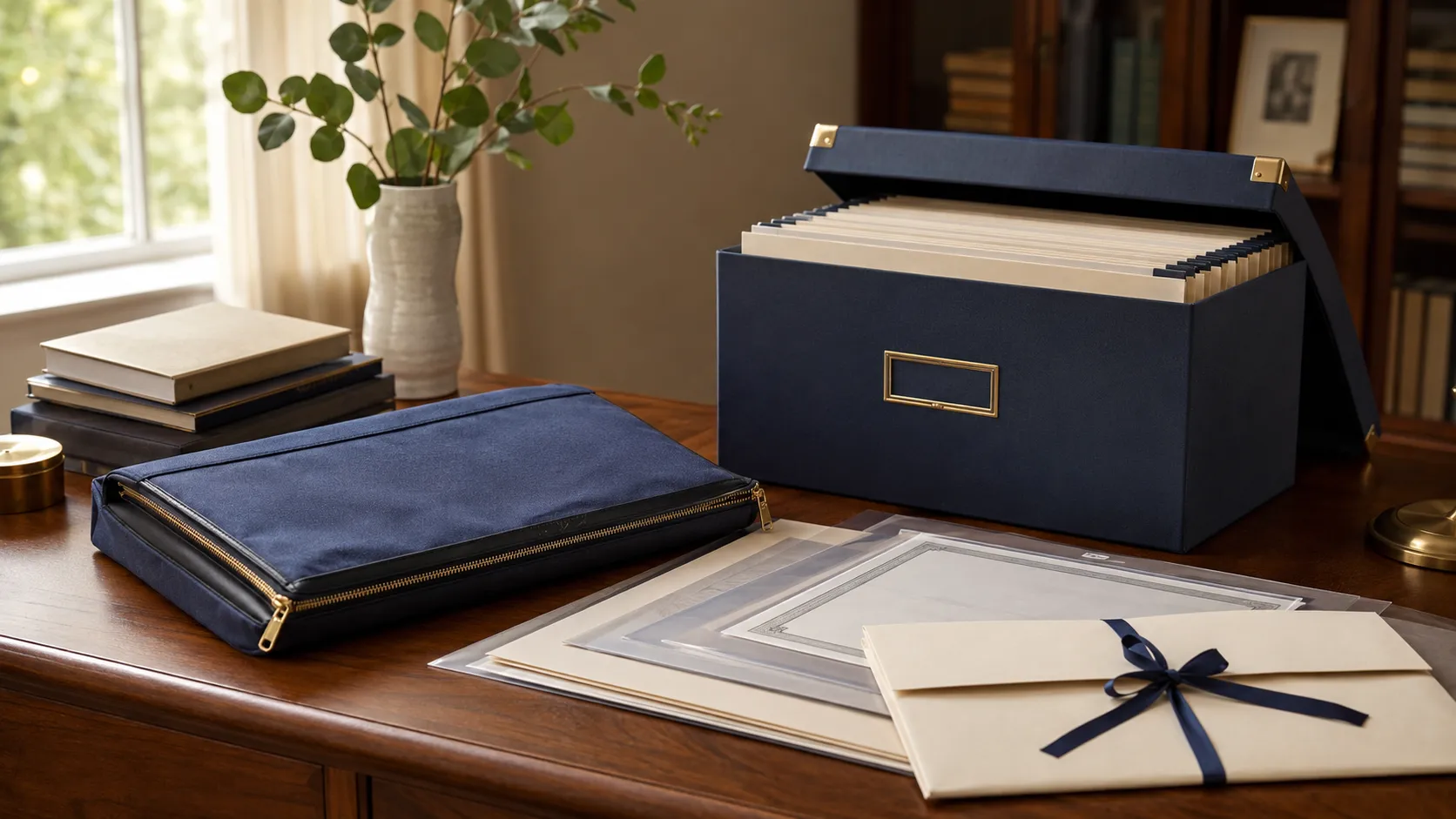
- Acid-free, lignin-free folders and sleeves. Look for "archival" or "acid-free" explicitly. Standard office folders are acidic.
- Polyester (Mylar) or polypropylene sleeves for documents you handle often. Avoid PVC — it degrades and can damage what's inside it.
- Store flat, not rolled. Rolled documents develop a permanent curl and crack along the curve over time. This especially applies to diplomas, which often arrive rolled.
- Unfold what's folded, if it's something you'll keep for decades. Fold lines eventually become tear lines.
- Interleave with acid-free tissue if you're stacking documents with ink or seals that could transfer.
Where in the house
Interior closets on the main floor are usually the best environment — stable temperature, no exterior wall condensation, away from plumbing. Avoid basements (flooding, humidity), attics (heat, extreme swings), garages (everything at once), and any closet sharing a wall with a bathroom or kitchen.
Off the floor is a small habit that pays off in a flood. Even a few inches of elevation matters.
The digital half
Physical protection handles most scenarios. Digital backups handle the rest — and they're what actually lets you recover fast when something goes wrong.
Scan everything in Tier 1 and Tier 2
Scan at 600 DPI in color, even for black-and-white documents — color captures seal impressions, stamps, and paper texture that matter for verification. Save as PDF for everyday use, and consider TIFF for anything you want archived at maximum fidelity.
Phone scanning apps are fine for Tier 2. For Tier 1, a flatbed scanner produces meaningfully better results and doesn't risk the geometric distortion phone apps introduce.
Three copies, and not all in one place
The standard approach: your computer, a cloud service, and an external drive. The point is that no single event — a house fire, a stolen laptop, a cloud account lockout — takes out all three.
Encrypt the cloud copy, or use a service with strong encryption. You're storing Social Security numbers and identity documents; treat them accordingly.
Make them findable
A backup you can't locate under pressure isn't much of a backup. Name files descriptively (birth-certificate-jane-2026-scan.pdf, not scan_0047.pdf), keep a consistent folder structure, and tell one trusted person how to find them if something happens to you.
Storing key documents in a password manager's secure notes is a genuinely good move — encrypted, accessible from anywhere, and already part of a system you check regularly.
What goes in a safe deposit box instead
Bank safe deposit boxes are excellent for a narrow category: documents you almost never need physically but absolutely can't lose. Property deeds, original wills (though check your state's rules — some make estate access complicated), and irreplaceable originals.
What not to put there: anything you might need urgently outside banking hours, and anything needed immediately after a death, since access can be restricted during estate proceedings. Original wills are the classic mistake — the executor may need court authorization to open the box holding the document that names them executor.
Where diplomas fit
Diplomas occupy an awkward spot in all this, because they're the one important document people specifically want to look at.
Everything else on the Tier 1 list lives in a folder and stays there. The diploma is supposed to go on a wall — which is exactly the environment that degrades it. UV, humidity swings, non-archival matting, glass contact, and a few decades of gravity all take a toll.
The approach conservators generally take with valuable documents is to store the original properly and display a reproduction. That's why museums display facsimiles of famous documents while the originals sit in climate-controlled storage. For a personal diploma the logic is identical: the original goes in the safe with the rest of Tier 1, and what hangs on the wall is a display copy that can be replaced if it fades.
Some people keep the original on the wall anyway, which is a fair choice — it just means investing in museum-grade UV glazing and acid-free matting, and picking a wall away from direct sun. Our guide to displaying your diploma at home covers the framing specifics either way, and our replacement vs replica diploma explainer covers the difference between an official replacement and a display copy.
If your diploma is already lost or damaged, that's a separate errand — our lost high school diploma guide walks through requesting a replacement before you worry about storing it properly.
Build a grab-and-go kit
Separate from long-term storage: assemble a single portable folder of what you'd need in an emergency evacuation. Copies (not originals) of IDs, insurance policies, medical information, emergency contacts, and a list of account numbers.
Keep it in a waterproof envelope somewhere you can grab in thirty seconds. The originals stay in the safe; the kit is what leaves with you.
Review it once a year
Documents accumulate and go stale. Once a year — pick a date you'll remember, like tax season — spend an hour:
- Add anything new to the safe and scan it
- Shred Tier 3 material past its retention period
- Check for humidity, discoloration, or pest signs
- Verify your digital backups actually open
- Confirm the trusted person still knows where everything is
That last one matters more than people expect. Storage systems only work if someone besides you can navigate them.
FAQ
What documents should I keep in a fireproof safe?
The irreplaceable ones: birth certificates, Social Security cards, passports, marriage and divorce records, wills, deeds, titles, original diplomas, military discharge papers, naturalization documents. Usually a surprisingly small stack.
Do I need a fireproof safe or is a filing cabinet enough?
For Tier 1, get the safe — a filing cabinet offers essentially no protection against fire or water, which are the main threats. A cabinet is fine for Tier 2 and 3.
Is a safe deposit box better than a home safe?
They serve different purposes. Safe deposit boxes are great for things you rarely need physically. But access is limited to banking hours and can be restricted during estate proceedings — which is why keeping an original will there is often a bad idea. Many people use both.
How should I store my diploma?
Flat (not rolled), in an acid-free sleeve, in a fireproof waterproof safe. If you want it visible, the conservator's approach is to store the original and display a copy — that's what museums do with valuable documents.
Can I laminate important documents?
Don't. Lamination is irreversible, traps moisture, and many institutions reject laminated documents as potentially altered. Use an archival sleeve instead — same protection, fully reversible.
How long should I keep tax returns?
General guidance is seven years for returns and supporting documents, though it varies with your situation. Records related to property should be kept until you've sold it and any relevant period has passed.
Are digital copies acceptable instead of originals?
For your own reference and for recreating lost documents, yes. But most official processes require originals or officially certified copies. Digital backups are for recovery and convenience, not substitution.
What's the best way to scan documents?
600 DPI in color on a flatbed scanner, saved as PDF (plus TIFF for archival copies). Phone apps are fine for less critical items but introduce distortion.
Where should I store documents if I don't have a safe?
An interior main-floor closet, off the floor, in acid-free folders inside a sealed plastic bin. Not ideal, but far better than a basement or garage. And make sure your digital backups are solid in the meantime.
Should I keep documents in plastic sleeves?
Yes, if they're the right plastic. Polyester (Mylar) or polypropylene are safe. Avoid PVC, which degrades and can damage what's inside.
What if my documents are already damaged?
Depends on the document and the damage. Paper conservators can address some water damage and yellowing, though it's expensive. For most documents, requesting an official replacement is cheaper and more practical than restoration.
How do I organize documents so my family can find them?
Write a one-page index of what's stored where — including digital locations and how to access them — and give a copy to one trusted person. Keep it current. This is the step people skip and families regret.
Storage needs vary with your climate, your home, and what you're keeping — coastal humidity and desert dryness are different problems. For genuinely valuable or historically significant documents, a professional paper conservator is worth a consultation before you settle on a long-term setup.