
Losing a vocational qualification certificate can feel surprisingly serious, especially when an employer, licensing body, college or immigration adviser has asked you to prove a qualification you completed years ago. The good news is that City & Guilds has an official archive service for replacement certificates, qualification confirmation and related requests.
What you need to know: if your City & Guilds certificate was issued within the last calendar month, contact the centre where you studied. If it was issued more than one calendar month ago, use the official City & Guilds online archive application. Give as much accurate information as possible, upload any old evidence you still have, choose the correct search type and check the current fee before paying.
A replacement request is not the same thing as ordering an ordinary photocopy. City & Guilds must search its records, match the learner to the qualification and issue the appropriate official document. That distinction matters because only the awarding organisation can certify what its records show.
This guide explains the process in plain English. It covers what “replacement” and “copy” mean, the information the archive team asks for, third-party consent, changes of name, digital access, current costs, likely processing time and what to do when an archive search does not find a record. It is written for learners, relatives helping a learner, employers and anyone trying to prove an older City & Guilds qualification.
Can You Get a Replacement City & Guilds Certificate?
Yes, in many cases you can apply for an official City & Guilds replacement certificate. The exact outcome depends on the qualification, the age and completeness of the archived record, the type of document requested and whether the information you submit is sufficient to locate the correct learner record.
City & Guilds calls the process a record or archive search. Its application covers several outcomes, including a standard certificate replacement, confirmation of a qualification, a qualification comparison and amendments to certain personal details. You should choose the option that matches the reason you need evidence. Selecting a replacement certificate simply because it sounds familiar can waste time if an employer actually needs direct confirmation or if an overseas authority needs a comparison letter.
The official City & Guilds replacement certificate page should always be your starting point. It links to the live archive application and states the current service conditions. Bookmark that page rather than relying on a third-party form copied elsewhere.
How to Get Copies of City & Guilds Certificates
People often say they need a “copy” when they mean one of several different things. You may want another official paper certificate because the original is lost. You may need City & Guilds to confirm a qualification to an employer. You may be trying to download an electronic certificate that was already issued through a participating centre. Or you may only need a scan of the original for your own records.
Those are not interchangeable requests. A scan or photocopy can preserve the information visible on an original, but it does not create a new official record. A certificate produced by an unrelated seller cannot prove that City & Guilds awarded a qualification. When a receiving organisation asks for official evidence, use City & Guilds or follow the precise verification method the organisation specifies.
Before opening the form, ask the person or organisation requesting evidence what they will accept:
- an official replacement certificate;
- a qualification confirmation sent or issued by City & Guilds;
- a verifiable electronic certificate;
- a comparison letter for a particular qualification;
- a certified copy of an original you still possess; or
- a simple scan for an informal records check.
Getting that answer first helps you select the right service. It also prevents the common situation where someone pays for one document and later discovers that the recipient wanted another.
Choose the Correct Type of City & Guilds Request
Standard certificate replacement
This is normally the relevant option when an original City & Guilds certificate has been lost, stolen or damaged and you need an official replacement. If you retain a damaged certificate, old results notification, wallet card, course letter or clear photograph, keep it. The archive form says that existing documentation can help the team carry out a successful search.
Qualification confirmation
Confirmation is useful when a third party needs City & Guilds to verify that the learner holds a qualification. An employer, professional organisation or another institution may prefer confirmation because it comes from the awarding organisation rather than from the applicant. If the request is being made by someone other than the learner, consent and identity evidence are required.
Qualification comparison
A comparison request is different from merely replacing lost paper. It may be relevant when someone needs information about how one City & Guilds qualification compares with another qualification or framework. Do not assume that a comparison letter will automatically satisfy a university, regulator or overseas authority. Ask the receiving body what wording or evidence it requires, then describe that need accurately in the application.
Amending personal details
City & Guilds also accepts certain requests to amend details on a certificate. These require supporting evidence appropriate to the requested change. The official page lists items such as an in-date passport or driving licence, deed poll, birth certificate, marriage or divorce papers and an official letter. The exact combination depends on what is changing, so read the current instructions rather than uploading every personal document you own.
Electronic certificate access
Some learners may have access to a City & Guilds electronic certificate through MyCertis. City & Guilds says its electronic service can allow viewing, downloading, printing and employer verification. However, the official page also says access has been available to only a limited number of learners during its rollout. An electronic route is therefore worth checking, but it is not safe to assume that every historic qualification is available in an online account.
If your centre issued you an electronic certificate, follow the instructions supplied by the centre and use the official verification facility. If you were never given access, do not create accounts on lookalike sites or pay anyone who claims they can unlock your record. Use the City & Guilds electronic certificate guidance or contact Learner Support.
Step-by-Step: Request a City & Guilds Replacement Certificate
1. Confirm that City & Guilds was the awarding organisation
Start by checking any evidence you still have. Look at a results slip, course handbook, apprenticeship portfolio, old CV, training centre letter, wallet card, photograph of the certificate or email from the provider. Training companies sometimes delivered courses that led to awards from different organisations, so the provider’s name alone does not prove who issued the qualification.
If you are unsure, contact the school, college, employer or training centre where you completed the course. Ask for the awarding organisation, exact qualification title, level, approximate award date, centre name and centre number. Even if the centre cannot issue a replacement, it may be able to identify the record holder.
For general guidance on tracing the correct record holder, see THEGRADORA’s replacement educational documents guide. If the missing qualification is actually a GCSE rather than a vocational City & Guilds award, follow the separate process in our guide to replacement GCSE certificates.
2. Work out when the certificate was issued
The one-month boundary changes the route. City & Guilds tells learners to contact their centre when the replacement request is within one calendar month of the certificate issue date. The centre can request the replacement and any required amendment on the learner’s behalf.
If more than one calendar month has passed, submit the request through the official online archive and payment form. This rule is about the issue date of the certificate, not the date you first noticed it was missing. If you do not know the exact issue date but completed the qualification years ago, the archive route is normally the sensible starting point.
3. Ask what evidence the recipient requires
If the request has been triggered by a new job, course, licence, visa or professional registration, contact the recipient before paying. Ask whether it needs a replacement certificate, direct qualification confirmation, an electronic verification result or a comparison letter. Keep its written response. You can then select the correct search type and explain the intended purpose without guessing.
Be especially careful when an overseas institution uses the word “transcript.” A vocational awarding organisation may not produce the same kind of semester transcript as a university. Ask the institution to describe the facts it needs confirmed and whether a City & Guilds certificate or confirmation letter is acceptable.
4. Gather the learner and qualification details
The online form asks applicants to provide as much information as possible. At a minimum, be ready with the learner’s full name, date of birth, qualification title, award type, approximate date range and centre name. The form also allows a centre number and enrolment number when known. If the learner’s current name or other details differ from the original record, enter the historic information in the appropriate field.
Do not “improve” an uncertain qualification title by guessing. Write what you know and use the additional information field to explain uncertainty. A partial but honest title, paired with a date range, subject area, centre and enrolment number, is more useful than a confident but incorrect title that points the search towards a different record.
5. Prepare supporting files
Upload a copy of an original certificate or results list if one is available. A phone photograph may still contain useful identifiers, even if the document is torn or faded. Check that the image is readable before attaching it. Include only relevant documents and use a sensible filename so you can recognise what was submitted later.
Different search types call for different evidence. A third-party confirmation request needs the learner’s consent and proof of identity. A name amendment may require a marriage certificate, divorce certificate or deed poll. A date-of-birth correction may require valid photo identification. Follow the current file list shown in the live form.
6. Complete the official archive search form
Use the official City & Guilds record search form. It takes you through the search details, billing and delivery information, order review, payment and confirmation. Check the domain carefully before entering identity or payment details.
Select whether the request is from the learner or a third party. Choose the document or service required. Enter contact, qualification, learner and centre details carefully. Review spelling, dates and email address before paying because the form warns that an order cannot be amended or cancelled after placement.
7. Pay the fee only after reviewing the request
The payment is for an archive search, not a guarantee that a record will be found. City & Guilds states that the processing fee is non-refundable even when the search is unsuccessful. It also applies separately to each individual certificate, confirmation or comparison letter. If you need evidence of several awards, check whether you must make and pay for a separate application for each one.
8. Save the confirmation and monitor your email
After submitting, save the order confirmation, reference number, payment receipt and a copy of the details you entered. Check the inbox and spam folder connected to the application. If City & Guilds asks for clarification or another document, reply using the official contact route and quote the reference number.
What Information Do You Need?
A strong application gives the archive team several independent ways to match the learner to the record. You may not know every detail, particularly for a qualification completed decades ago, but collect what you can before starting.
- Full learner name: use the name held at the time of the award, including former surnames and the exact spelling if known.
- Date of birth: enter it carefully and make sure it belongs to the learner whose qualification is being searched.
- Qualification title: include the trade, subject, level and award wording shown on any old evidence.
- Award type: select the closest accurate option in the official form.
- Approximate date range: give the likely period in which the certificate was awarded, not merely the year the course began.
- Centre name: use the name of the school, college, employer or training provider at the time.
- Centre number: include it if an old document or the provider can supply it.
- Enrolment number: add this when available; it can be a valuable link to the archived learner record.
- Previous personal details: give the name or other details as they appeared on the original certificate when different from today.
- Existing evidence: attach a readable certificate copy, results notification or another relevant record if you have one.
It is worth searching old email accounts and cloud folders before submitting. Try the course name, provider name, “City & Guilds,” “result,” “certificate,” “enrolment” and any candidate number you remember. Ask former employers whether a personnel file contains the copy you supplied when you joined. Even a low-quality scan can reveal an exact title or number that makes the archive search more precise.
What If You Cannot Remember the Qualification Title?
This is common. Many people remember the occupation—electrical installation, motor vehicle maintenance, hairdressing, catering, construction or engineering—but not the formal award title, level or qualification number. Others completed several related units over a long apprenticeship and are unsure which certificate represented the final award.
Begin with the centre. Ask its examinations or records team to search by your name, date of birth and attendance years. If the organisation has merged or changed names, search for its successor institution. A former tutor may remember which syllabus was delivered, but use that information as a lead rather than treating memory as official proof.
Write down the course content, practical assessments, workplace, attendance dates, level and any units you recall. The archive application asks for a qualification title, so provide the most accurate wording you can and explain any uncertainty in the additional information box. Upload old papers that show a candidate, enrolment, centre or qualification number.
Useful distinction: the place where you studied is the centre; City & Guilds is the awarding organisation. A centre may help identify a record, but an old centre usually cannot recreate an official City & Guilds award from its own template.
What If the Training Centre Has Closed?
A closed centre does not automatically mean the qualification record has disappeared. City & Guilds maintains an archive service precisely because learners often need evidence long after a course ends. Apply through the official archive route and give the centre’s historic name, location and approximate dates.
Look for successor organisations. A college may have merged, an employer training division may have been renamed, or a private provider may have transferred learners to another centre. Local authority records, archived prospectuses, apprenticeship paperwork and former employer files can help establish the name that would have appeared in the original entry.
City & Guilds also publishes a centre-closure concern route for learners who are currently affected by a provider closing. That channel is intended for genuine centre-closure support, not as a substitute for ordinary archive or learner enquiries. For a historic certificate request, follow the replacement page unless Learner Support tells you otherwise.
Can Someone Else Apply for You?
Yes, but privacy requirements apply. When an employer, family member, solicitor, agency or other third party requests a replacement, confirmation or comparison, City & Guilds requires the learner’s signed and dated consent and proof of identity. The official instructions refer to a colour copy of an in-date passport or driving licence.
Consent should be specific enough to show that the learner agrees to the release of qualification information for the request. Do not reuse a vague consent note from an unrelated process. Download the current consent form from the official replacement page, complete it carefully and attach it with the required identity document.
If the learner has died or cannot provide consent, do not assume the ordinary third-party form will work. Contact Learner Support and explain the circumstances without sending sensitive documents before being asked. The team can tell you what authority or evidence is required for that particular case.
How Do You Change a Name or Other Detail?
There is an important difference between correcting an error that existed when a certificate was issued and showing a name adopted later. The official archive form includes search types for amendments, but City & Guilds decides what it can amend and what evidence is acceptable.
For a name-related request, the replacement page lists evidence including a passport or driving licence, deed poll, birth certificate, marriage or divorce papers and an official letter such as a bank statement, payslip or doctor’s letter. The form separately identifies documentation for changes involving date of birth or gender. Submit the evidence requested for your case and make sure colour scans are complete and legible.
Do not alter a scan of an old certificate yourself. That creates a document that no longer accurately reproduces what the awarding organisation issued. If you need to connect an old qualification name with your current identity, use the official amendment process or present the original evidence together with lawful name-change documentation, depending on the recipient’s requirements.
How Much Does a Replacement City & Guilds Certificate Cost?
As checked on 10 September 2026, the City & Guilds replacement page states that an archive-record search costs £50 plus UK VAT where applicable. The organisation says the fee is non-refundable even if it cannot find the record. It also says the fee covers one individual certificate, confirmation or comparison letter; additional documents require additional applications.
Fees and tax treatment can change, so use this figure as dated context rather than a permanent quotation. Check the live replacement page and review the amount shown in the official order before payment. If you need several qualifications, calculate the likely total first and ask the receiving organisation which of them it truly needs.
The fact that a search is chargeable does not mean the award is guaranteed to exist in retrievable form. Archive staff still need to locate a record that matches the submitted information. That is why preparation matters: accurate names, dates, centre details and any surviving evidence give the search a better foundation.
How Long Does a City & Guilds Replacement Certificate Take?
As checked on 10 September 2026, City & Guilds says an application can take up to three weeks to process. Treat that as the published processing period, not a guaranteed delivery date to every address. Time may also be needed for clarification, payment handling, production and post or courier delivery.
Do not wait until the evening before a job interview, course deadline or professional registration renewal. Apply as soon as you know evidence will be required. Tell the recipient that an official archive request is in progress and ask whether it will temporarily accept an application receipt, an old scan, direct contact with the awarding organisation or another form of evidence.
If the published period has passed, contact City & Guilds through its official learner support route. Include the order reference, learner name, submission date and a concise description of the request. Avoid submitting and paying for an identical second order unless the support team specifically advises it.
Can You Get a City & Guilds Certificate Online?
There are two meanings of “online” here. The archive application and payment process is online, but the document requested may be a replacement paper certificate or letter. Separately, some learners can access an electronic certificate through the City & Guilds electronic certificate service.
City & Guilds says electronic certificates can be viewed, downloaded and printed and can be verified by employers. It also notes that learner login access has been limited during the service rollout. If your centre issued an electronic certificate, use the official platform and verification route. If it did not, the presence of an electronic service does not prove your older award will appear there.
A PDF or printout obtained through an official account carries a different evidential trail from an image assembled by a third party. When proof matters, the recipient should be able to follow City & Guilds’ verification process or rely on a document the awarding organisation issued after searching its archive.
Will an Employer Accept a Replacement Certificate?
Many employers accept an official replacement, but acceptance is ultimately the employer’s decision and may depend on the role, industry and regulatory rules. For safety-critical or regulated work, an employer may want direct qualification confirmation, an electronic verification result, evidence of current competence or additional cards and registrations.
For example, an old vocational certificate may show that training was completed at a particular level, but it does not automatically prove that every modern legal, safety or continuing-competence requirement has been met. Ask the employer which qualification, version and verification route it requires. Do not represent a historical award as a current licence if it is not one.
If an employer wants to apply directly, the learner must provide the required consent and identity evidence. A better approach is often for the learner and employer to agree on the exact request before the form is submitted. That protects the learner’s privacy and reduces the chance of ordering the wrong document.
What Happens If City & Guilds Cannot Find the Record?
An unsuccessful search is frustrating, particularly because the fee is non-refundable. It does not necessarily mean that the learner never completed any training. It means the archive search did not locate the requested record from the information and evidence supplied, or that the particular record is not available in the way expected.
Review the application for common problems:
- Was the qualification definitely awarded by City & Guilds?
- Was the learner entered under a former name or a different spelling?
- Did the award date fall outside the date range entered?
- Was the centre known by another legal or trading name?
- Was the course completed but the full qualification never claimed?
- Could the document have come from another awarding organisation?
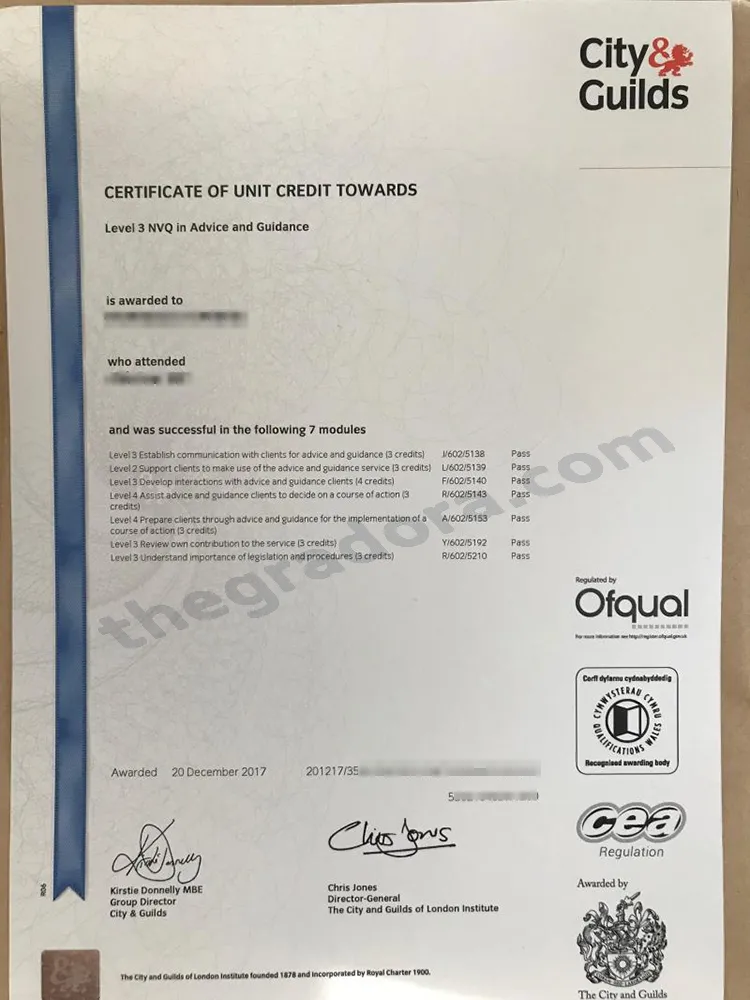
- Was a unit certificate confused with a full qualification certificate?
Contact the former centre or its successor and ask for entry, assessment or certification records. Check former employer training files and apprenticeship evidence. If new, material information comes to light, contact Learner Support with the original reference before placing another paid order. The support team can explain the appropriate next step, although it cannot promise that a record will be found.
Common Mistakes That Delay or Weaken an Application
Applying through an unofficial service
A polished website or advertisement is not evidence that a business has access to City & Guilds records. Begin on the official City & Guilds website and follow its link to the archive portal. Never send identity documents to an unrelated seller that claims it can reproduce an award.
Using only the current name
Archive records are matched against the details held at the time. If your surname, spelling or other personal information has changed, give both the current and historic information in the correct fields and provide the required supporting evidence.
Entering the course provider as the awarding organisation
A college or private training company may have taught the course while City & Guilds awarded the qualification. Conversely, a provider may have offered similar courses from several awarding organisations. Confirm the logo and wording on any surviving paperwork.
Requesting a certificate when confirmation is needed
If an employer wants verification directly from the awarding organisation, a replacement certificate sent to the learner may not be its preferred evidence. Ask first, then select the correct search type.
Providing a wide or inaccurate date range without explanation
A broad range may be unavoidable for an old award, but supplement it with the attendance period, course duration, employer, centre address, subject and any candidate number. More context makes the uncertainty understandable.
Assuming payment guarantees success
The published fee pays for the archive search. City & Guilds explicitly says it is not refunded when no record is found. Gather your best evidence before placing the order.
Sending sensitive documents by an unverified route
Identity and name-change records are sensitive. Upload them only through the official application or send them using a method confirmed by City & Guilds. Check the address carefully and keep a record of what you supplied.
How to Store the New Certificate Safely
Once the official document arrives, make one good-quality colour scan for your private records. Store the original flat in an acid-free sleeve or folder, away from direct sunlight, damp, heat and places where it may be folded. Keep it separate from items that are frequently carried or moved.
Name the digital file clearly and keep encrypted or access-controlled backups in two locations. A filename containing the awarding organisation, qualification and award year is easier to find later than “scan001.pdf.” Do not put identity documents or certificates in a publicly shared folder.
Also save the order confirmation and any verification instructions. If an employer later asks how to check the document, you will have the relevant official route ready. A well-organised record cannot prevent every future problem, but it can make the next request far quicker.
Important Notice: Official Proof and Decorative Certificates Are Different
THEGRADORA is not City & Guilds, a training centre, an awarding organisation, a regulator or a qualification-verification service. THEGRADORA products are commemorative display certificates for personal display, gifts, remembrance, photography, theatre and events. They are not official qualifications, replacement credentials, licences, identity documents or verified records.
Never use a decorative certificate for employment screening, education admission, professional registration, licensing, immigration, identity checks, qualification verification or any misleading purpose. You can learn more about THEGRADORA and its clearly non-official products on the THEGRADORA homepage.
City & Guilds Replacement Certificate Checklist
- Confirm that City & Guilds awarded the qualification.
- Ask the recipient which official document it will accept.
- Check whether the certificate was issued within the last calendar month.
- Record the learner’s current name and name used at the time.
- Collect the date of birth, qualification title and award type.
- Estimate the award date as accurately as possible.
- Find the centre name, centre number and enrolment number if available.
- Scan any old certificate, results list or supporting evidence.
- Prepare consent and identity evidence for a third-party request.
- Use the official City & Guilds archive form.
- Review every field before payment.
- Confirm the live fee, VAT position and processing information.
- Save the receipt, reference number and submitted details.
- Allow time for processing and delivery before your deadline.
Frequently Asked Questions
How do I get a replacement City & Guilds certificate?
If the certificate was issued within the last calendar month, contact the centre where you studied. If more than one calendar month has passed, use the official City & Guilds archive search form. Choose the correct request type, enter the learner and qualification details, upload relevant evidence, review the current fee and save the order reference after payment.
Can I get a copy of my City & Guilds certificate online?
You can submit and pay for an archive request online. Some learners can also access an electronic certificate through the official service if their centre has issued one. Access is not available for every learner or historic award, so check the official electronic certificate guidance or ask Learner Support.
How much is a City & Guilds replacement certificate?
As checked on 10 September 2026, City & Guilds publishes a £50 archive-search fee plus UK VAT where applicable. The fee is non-refundable if the search does not find the record and applies to one individual certificate, confirmation or comparison letter. Check the live official page before paying because charges can change.
How long does a City & Guilds replacement take?
As checked on 10 September 2026, City & Guilds says an application can take up to three weeks to process. Delivery and any time needed to resolve missing information may add to that period. Apply early and confirm the current estimate on the official page.
What details do I need for a City & Guilds archive search?
Prepare the learner’s full name, name used when the qualification was awarded, date of birth, qualification title, award type, approximate award dates and centre name. A centre number, enrolment number, old certificate copy or results list can also help when available.
What if I cannot remember my City & Guilds qualification title?
Contact the former centre or its successor and search old emails, CVs, apprenticeship files, results notices and employer records. Gather the subject, level, attendance dates, centre and any learner number you can find. Enter the most accurate title available and explain uncertainty in the additional information field.
Can my old college issue the replacement certificate?
A centre can handle a replacement request when the certificate was issued within the last calendar month. For older certificates, City & Guilds directs learners to its archive application. An old college may still help identify the exact qualification, centre number and award date.
Can an employer request confirmation of my qualification?
Yes, a third party can request confirmation, but City & Guilds requires the learner’s signed and dated consent and proof of identity. Use the current consent form linked from the official replacement page and confirm what the employer needs before submitting the paid request.
Will I get a refund if City & Guilds cannot find my record?
No. City & Guilds states that the fee pays for the archive search and is non-refundable even when a record is not found. Check the awarding organisation, historic name, dates, centre and any surviving documents before applying.
Can I change the name on a City & Guilds certificate?
The archive service includes amendment requests, but supporting evidence is required and City & Guilds decides what it can amend. Read the current instructions for the type of change and upload the specified identity, deed poll, birth, marriage, divorce or other official documents as applicable.
What should I do if my training centre has closed?
Use the City & Guilds archive service and provide the centre’s former name, location and approximate dates. Search for a successor institution and collect any old course or employer paperwork. A centre closure does not automatically mean the awarding organisation’s record is unavailable.
Is a decorative certificate official proof of a City & Guilds qualification?
No. Only evidence issued or verified through City & Guilds can serve as official proof of its qualification records. A decorative certificate must never be used for employment, admission, licensing, immigration, identity or qualification-verification purposes.
Final Advice
The most reliable route is also the simplest: identify the exact qualification, ask the recipient what official evidence it wants and apply through City & Guilds with the best information you can assemble.
For a recent certificate, speak to the centre promptly. For an older one, use the official archive form, understand that the fee covers a search and allow enough time before your deadline. A careful application cannot guarantee that every historic record will be found, but it gives the archive team the clearest possible path to the correct result.